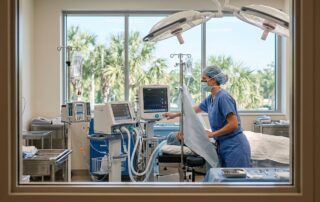
Social Security Disability Attorneys


The Only Law Office in Southwest Florida with Board Certified Social Security Disability Attorneys.

Attorneys at Avard Law Offices, P.A. have been handling Social Security and Long Term Disability cases since 1981. When selecting a Social Security Disability Attorney, it is important to know if the Attorney will take your case up through the Federal Court system. Many representatives handling Social Security Disability cases do not appeal to the Federal Courts. Avard Law Offices, P.A. has numerous published cases and non-published cases concerning important issues on Social Security Disability and Personal Injury cases.

Avard Law Offices, P.A. handles many types of car accidents: Bodily Injury, Under insured Motorist, Uninsured Motorist, improper vehicle design, failure of air bags to deploy, and exploding tire cases. Just because you did not have Insurance, that does not mean that you cannot collect for your injuries. It is important to contact an attorney immediately in order to understand your legal rights. It is important to seek legal assistance to investigate the accident before important pieces of evidence are lost.

Avard Law Offices, P.A. handles nursing home abuse and negligence cases that include neglect causing bed sores, fractures, falls, unexplained injuries, malnutrition, improper medication, weight loss, unsanitary conditions, unexpected death, improper restraining systems, assaults of an elder resident, lack of adequate care in both assisted living facilities as well as nursing homes, and over-medication cases. It is important to seek an attorney immediately in order to prevent future abuse to the patient and others.

Avard Law Offices, P.A. handles very serious medical malpractice cases that include surgical injuries, performing procedures incorrectly, hospital negligence, cancer misdiagnosis, birth injuries, medication errors, failure to diagnose, and malpractice at Veterans Hospitals and Clinics.

Avard Law Offices, P.A. has handled a variety of personal injury cases due to falls from ladders, slip and falls in stores and apartment complexes, toxic mold cases, injuries from ingestion of dangerous drugs, burns from hair dyes, breast implant cases, etc. If you or a family member have been injured through no fault of your own, contact Avard Law Offices, P.A.

Avard Law Offices, P.A. handles medical malpractice claims where the malpractice has occurred within a Veterans Hospital or Clinic. These claims include such things as traumatic brain injuries during birth, surgical mishaps, failure to biopsy, and a variety of other types of negligence. In addition, we handle all types of Veterans Disability claims that go before the Board of Veterans Appeals and the U.S. Court of Veterans Appeals. The Attorneys also handles Veterans disability compensation and pension claims; aid and attendance claims to assist Vets and their families obtain nursing home and assisted living benefits; long-term care planning for Vets, claims caused by VA health care negligence at a VA hospital facility.

Avard Law Offices, P.A., handles employment discrimination cases that are based on the following types of discrimination: disability, race, color, age, religion or sex, such as sexual harassment, retaliation against an individual for filing a charge of discrimination, participating in an investigation, or opposing discriminatory practices, and discrimination against the handicapped or disabled in the hiring or firing, compensation, or promotion.

At Avard Law Offices, P.A., we practice law with one goal in mind: our clients come first. To meet this goal, we keep up-to-date with all the current changes in the law and have many published cases that have, in fact, changed the law for the better for our clients.

Social Security Disability Review

I was in Law Enforcement for 23 years and have seen numerous law firms perform in Criminal and Civil cases. After becoming unexpectedly disabled I was placed in a position where I now needed representation for my Social Security Disability case. After asking around several people recommended the Avard law firm, they all said they were a good firm. Those recommendations of Avard being a good firm was a severe understatement, they are an outstanding firm.
With some law firms it’s just about the money, but the Avard Law Firm truly cares about their clients and will fight to the end for what is right and just. I had numerous instances where the Social Security Judge violated not only my rights but social security law and they caught him every time, they are not afraid to fight for their clients. It has been my experience watching lawyers perform in court over the years that most of the time they are unprepared and looking to make the quick deal and buck, but not this firm. They are heavily involved in their cases and are completely prepared when representing a client. As far as their expertise in the law you cannot find a more knowledgeable firm and they will do everything in their power to get you what is deserved.
I won my case due to their hard work and dedication to the client, I strongly recommend this firm to anyone needing representation and you would be doing yourself an injustice by going with any other Law Firm.

Charlie Ferrante

HOW DO I GET SOCIAL SECURITY DISABILITY

HOW DO I GET SOCIAL SECURITY DISABILITY
1. Are You Working?
If your earnings average more than $1,000/month, you are generally not considered disabled.
2. Is Your Condition Considered Severe?
A “severe impairment” is one that significantly affects your capacity to do work-related activities. If your impairment is not severe then you will lose your claim at this question.
3. Does your condition prevent you from returning to your last job?
If you can return to your previous job within 12 months of your disability onset, you will generally not be considered disabled.
4. Does your condition prevent you from doing all other kinds of work?
You may have a strong disability benefits claim. You can contact a Social Security attorney to assist you with filing a Disability Application right away.
You may still have a disability claim based on other factors; if you believe you are disabled, you should get a consultation on your case.
For a free disability case evaluation or to see if you qualify visit www.AvardLaw.com or call (800) 814-0808 or (239) 945-0808 to speak with a Legal Assistant.

Bruce M. Snell, Jr., Retired Supreme Court Justice Thanks Avard Law

Dear Counselors Carol Avard & Mark Zakhvatayev,

I have practiced law fifty-seven years, thirty seven as an Appellate Judge, fourteen on the Iowa Supreme Court.  The legal brief that you sent to me, representing my daughter, is among the very best I have ever read.  Thank you for your great work as superb lawyers.

Yours truly,
Bruce M. Snell, Jr,
Retired Supreme Court Justice.

NOSSCR Replies to the Harmful Allegations about Social Security Disability Programs Perpetuated in Misleading Media Reports

Englewood Cliffs, N.J. – April 11, 2013 – The past few weeks have seen dramatic, sensationalized media reports about the Social Security Disability Insurance (SSDI) and Supplemental Security Income (SSI) programs, based on anecdotes, half-truths and misrepresentation of facts. The National Organization of Social Security Claimants’ Representatives (NOSSCR) is compelled to set the record straight about the program – which serves as a vital resource for millions of Americans.

Increase in Disability Rolls

The truth about the increase in disability rolls is that this was an expected trend, predicted as far back as 1994, with two very clear factors: the aging baby boomers entering their high-disability years, and women who entered the workforce in the 1970s and 1980s that are now eligible to draw on their own earnings record when they become disabled.

“The mistruths and recent media barrage is unwarranted and shocking,” said Nancy Shor, founder and executive director, NOSSCR. “We’re very concerned that they do not tell the entire story and that they will be harmful to the millions of Americans that depend on these modest benefits to maintain a basic quality of life. Yearly benefits are only around $13,000 per year – just enough to keep beneficiaries out of deep poverty and homelessness.”

Who Gets Benefits?

As eight former SSA Commissioners pointed out this week in an open letter, the standard for disability approval is strict; the majority of applicants are not approved. Disability benefits are only a modest asset that helps beneficiaries live with dignity while unable to work.

“There are more than 38 million disabled Americans, but only the most seriously disabled, or around 14 million, have proved eligible to receive benefits, which they depend on greatly” said Debra Shifrin, attorney and president of NOSSCR. “When comprehending the Social Security disability system, people need to understand that less than one third of initial applications are approved, and only 40 percent overall, as it requires evaluations and documentation to establish that these claimants are truly in great need.”

Highly Regulated Fee Structure

As a member organization made up of attorneys and other advocates who represent people with disabilities, we are very concerned with the gross mischaracterizations of representatives in recent stories. It is important to keep in mind that claimants who hire private attorneys do so voluntarily.  Claimant’s representatives’ highly regulated fees are taken on a contingency basis and are capped at 25% of the claimants’ past-due benefits, or $6,000 – whichever is lower. Additionally, the Federal Court appeals process is so time consuming and complex that few lawyers want to handle these cases at all. Attorneys that do this work are deeply committed to public service and are motivated to discourage frivolous claims that could overload an already burdened system.

Social Security Disability Benefits and The Economy

Simply put, Social Security disability benefits do not contribute to the deficit. SSDI is self-financed by payroll taxes (FICA) and SSI dollars come out of taxes raised, therefore not increasing the national debt.  Achieving long-term solvency for Social Security programs should not be part of deficit reduction efforts.

The Social Security Disability Insurance program is an essential component of our American government system, intended to be a social safety net for American workers unable to perform job functions and support their families. These attacks are blatantly one-sided, untrue and threaten the modest benefits that are needed by so many. We encourage the media to focus on solutions to reform the system to ensure it is strong and efficient for many years to come, rather than disparaging our nation’s most vulnerable population.

For more information or to speak with a representative or member of NOSSCR, please contact Lauren Weybrew at lweybrew@douglasgould.com or 646-214-0514.

About NOSSCR

NOSSCR, a specialized bar association for attorneys and other advocates who represent people with disabilities, has been a pioneer in legal continuing education and public policy advocacy since 1979. We represent Social Security Disability and Supplemental Security Insurance claimants through the adjudication process, advocating for the income rights of people with disabilities. Learn more at www.nosscr.org.

An Open Letter from Former Commissioners of the Social Security Administration

As former Commissioners of the Social Security Administration (SSA), we write to express our significant concerns regarding a series recently aired on This American Life, All Things Considered, and National Public Radio stations across the U.S. (“Unfit for Work: The Startling Rise of Disability in America”). Our nation’s Social Security system serves as a vital lifeline for millions of individuals with severe disabilities. We feel compelled to share our unique insight into the Social Security system because we know firsthand the dangers of mischaracterizing the disability programs via sensational, anecdote-based media accounts, leaving vulnerable beneficiaries to pick up the pieces.

Approximately 1 in 5 of our fellow Americans live with disabilities, but only those with the most significant disabilities qualify for disability benefits under Title II and Title XVI of the Social Security Act. Title II Old Age, Survivors, and Disability Insurance (DI) benefits and Title XVI Supplemental Security Income (SSI) benefits provide critical support to millions of Americans with the most severe disabilities, as well as their dependents and survivors. Disabled beneficiaries often report multiple impairments, and many have such poor health that they are terminally ill: about 1 in 5 male DI beneficiaries and 1 in 7 female DI beneficiaries die within 5 years of receiving benefits. Despite their impairments, many beneficiaries attempt work using the work incentives under the Social Security Act, and some do work part-time. For example, research by Mathematica and SSA finds that about 17 percent of beneficiaries worked in 2007. However, their earnings are generally very low (two-thirds of those who worked in 2007 earned less than $5,000 for the whole year), and only a small share are able to earn enough to be self-sufficient and leave the DI and SSI programs each year. Without Social Security or SSI, the alternatives for many beneficiaries are simply unthinkable.

The statutory standard for approval is very strict, and was made even more so in 1996. To implement this strict standard, Social Security Administration (SSA) regulations, policies, and procedures require extensive documentation and medical evidence at all levels of the application process. Less than one-third of initial DI and SSI applications are approved, and only about 40 percent of adult DI and SSI applicants receive benefits even after all levels of appeal. As with adults, most children who apply are denied SSI, and only the most severely impaired qualify for benefits.

Managing the eligibility process for the disability system is a challenging task, and errors will always occur in any system of this size. But the SSA makes every effort to pay benefits to the right person in the right amount at the right time. When an individual applies for one of SSA’s disability programs, the agency has extensive systems in place to ensure accurate decisions, and the agency is home to many dedicated public servants who take their ongoing responsibility of the proper stewardship of the programs very seriously. Program integrity is critically important and adequate funds must be available to make continued progress in quality assurance and monitoring. In the face of annual appropriations that were far below what the President requested in Fiscal Year 2011 and Fiscal Year 2012, the agency has still continued to implement many new system improvements that protect taxpayers and live up to Americans’ commitment to protect the most vulnerable in our society.

It is true that DI has grown significantly in the past 30 years. The growth that we’ve seen was predicted by actuaries as early as 1994 and is mostly the result of two factors: baby boomers entering their high-disability years, and women entering the workforce in large numbers in the 1970s and 1980s so that more are now “insured” for DI based on their own prior contributions. The increase in the number of children receiving SSI benefits in the past decade is similarly explained by larger economic factors, namely the increase in the number of poor and low-income children. More than 1 in 5 U.S. children live in poverty today and some 44 percent live in low-income households. Since SSI is a means-tested program, more poor and low-income children mean more children with disabilities are financially eligible for benefits. Importantly, the share of low-income children who receive SSI benefits has remained constant at less than four percent.

Yet, the series aired on NPR sensationalizes this growth, as well as the DI trust fund’s projected shortfall. History tells a less dramatic story. Since Social Security was enacted, Congress has “reallocated” payroll tax revenues across the OASI and DI trust funds – about equally in both directions – some 11 times to account for demographic shifts. In 1994, the last time such reallocation occurred, SSA actuaries projected that similar action would next be required in 2016. They were right on target.

We are deeply concerned that the series “Unfit for Work” failed to tell the whole story and perpetuated dangerous myths about the Social Security disability programs and the people helped by this vital system. We fear that listeners may come away with an incorrect impression of the program—as opposed to an understanding of the program actually based on facts.

As former Commissioners of the agency, we could not sit on the sidelines and witness this one perspective on the disability programs threaten to pull the rug out from under millions of people with severe disabilities. Drastic changes to these programs would lead to drastic consequences for some of America’s most vulnerable people. With the lives of so many vulnerable people at stake, it is vital that future reporting on the DI and SSI programs look at all parts of this important issue and take a balanced, careful look at how to preserve and strengthen these vital parts of our nation’s Social Security system.

Sincerely,

Kenneth S. Apfel
Michael J. Astrue
Jo Anne B. Barnhart
Shirley S. Chater
Herbert R. Doggette
Louis D. Enoff
Larry G. Massanari
Lawrence H. Thompson